
CNC Machining of Glass & Ceramics – Our Services
We support you from concept to series production: design-for-manufacturing consultation, rapid prototyping and highly automated series production of precision components made from technical glass, fused silica and technical ceramics. Each development step is iterative – functional samples and interim results keep you involved, allowing you to adjust requirements at any time.
± 3 µm
Manufacturing tolerances
> 8 nm
Surface roughness (Ra)
200x200x150 mm
Maximum component sizes
ISO 9001
Certification
- Find out more:
- Glass materials
- Ceramic materials
- Products
- Technology details
Development partner from the start
We support you from the design phase: material selection, design for manufacturability and cost optimisation for brittle-hard materials – before the first cut is made.
Our integrated CAD/CAM solutions, specifically developed for glass machining, significantly reduce development cycles. From prototyping at series quality to fully automated series production starting from batch size 1.
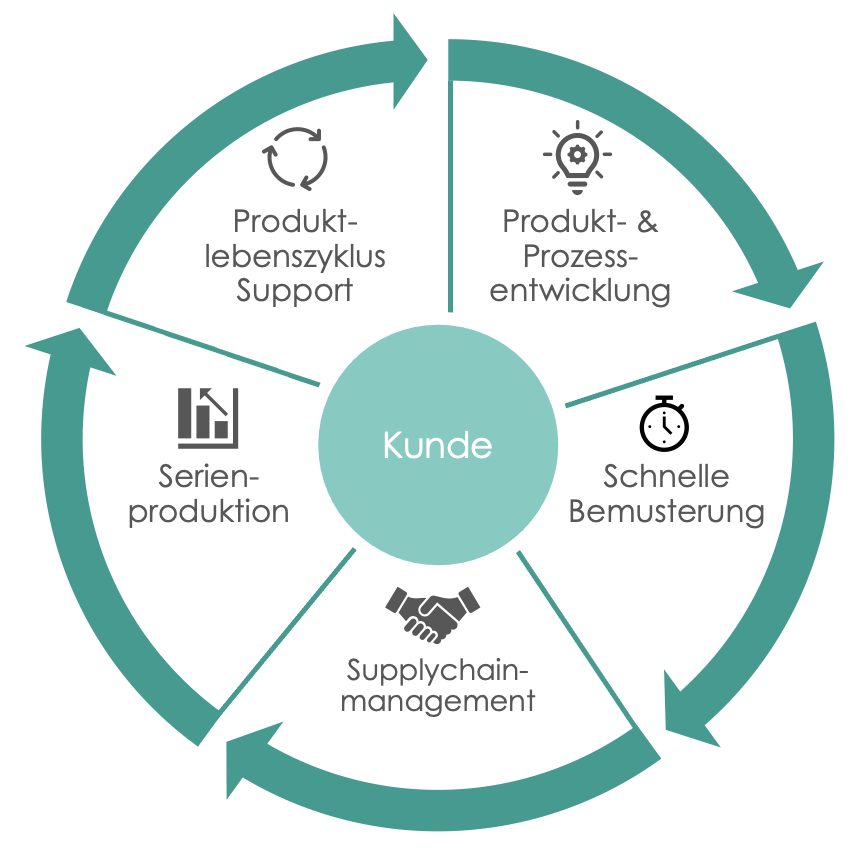
Your project at the centre – from concept to series
Material selection, design for manufacturability and integrated CAD/CAM solutions for your brittle-hard materials. We advise you from the design phase – before the first cut is made.
Functional samples and prototypes at series quality. Short lead times through digital product development and 5-axis CNC machining.
Highly automated production from batch size 1 with statistical process control. Consistent quality throughout the entire series – documented and traceable.
End-to-end solutions through our technology and supplier network. From raw material sourcing to on-time delivery.
Continuous optimisation of your products and manufacturing processes. Adjustments to requirements are possible at any time.
High accuracy measurement services
Every component is documented using multi-sensor coordinate metrology (Werth ScopeCheck). In-process measurement directly on the machining centre enables corrections during the process – dimensional deviations from tool wear are automatically compensated.
Visual, tactile and chromatic sensors capture even sensitive structures and surface topographies. From first samples to series: standard geometries, freeform surfaces, form and position tolerances, roughness measurements.